|
|

|
Hello,
This is Dr. M from OTCM.
On June 16, the Global K-Beauty Conference 2026, hosted by Korea's Maeil
Business Newspaper, successfully concluded with strong participation from across the
industry.
The conference brought together global experts from every sector of the beauty
industry-including raw materials and ingredients, manufacturing, logistics,
distribution, platforms, and medical beauty—making it a truly meaningful gathering for
the global K-beauty ecosystem. At this conference, our CEO Sungho Lee delivered a
presentation titled:
“The Key to Entering the U.S. Market: Everything You Need to Know About OTC Cosmetic
Development.”
The session received an overwhelmingly positive response from brands preparing to enter
the U.S. market.

To share the key insights from the conference with more partners and clients, OTCM is
launching a three-part newsletter series covering the core content of the presentation.
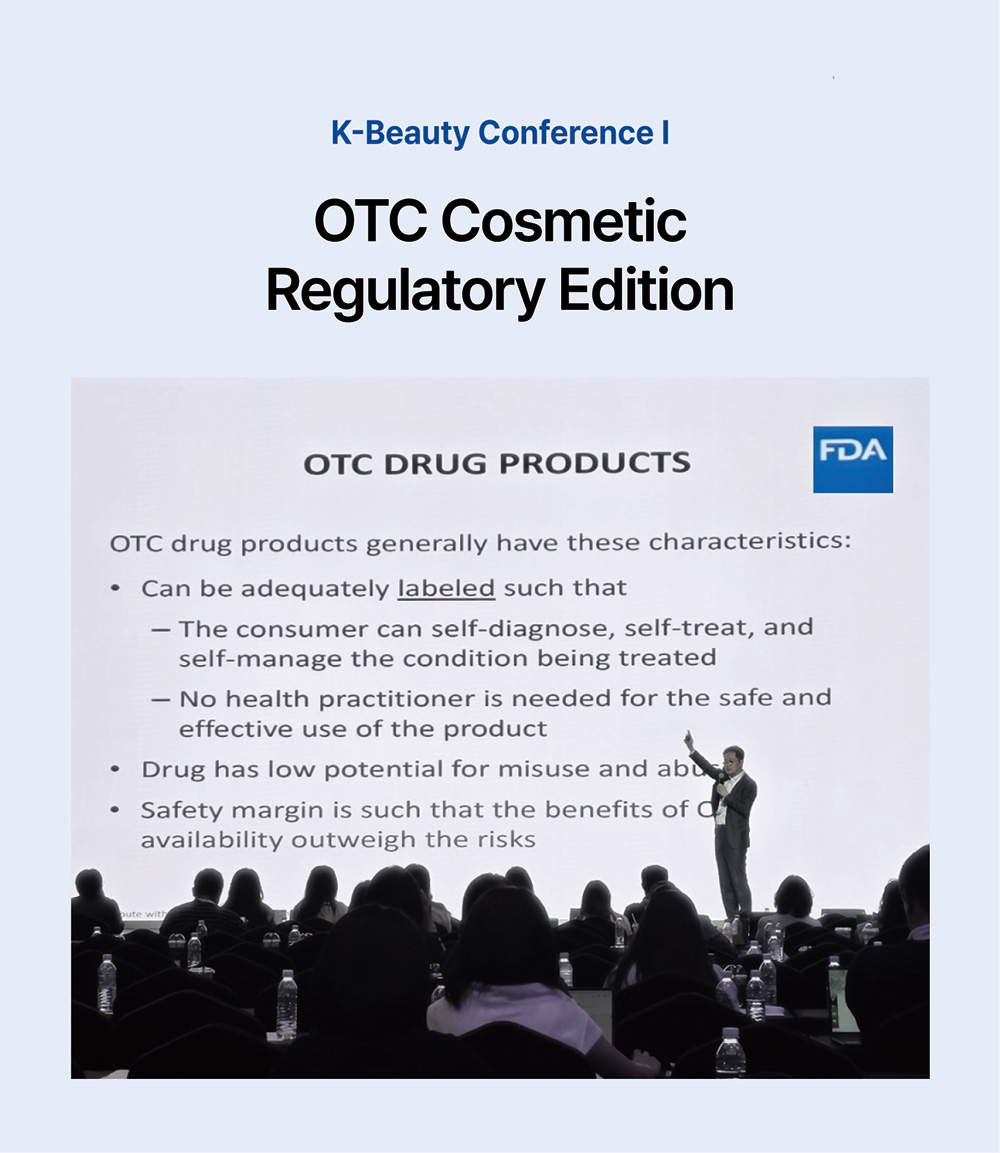
In this first edition, we will take a deep dive into one of the most fundamental yet
critical gateways to entering the U.S. market:
the concept of OTC drugs, OTC monographs, and key regulatory requirements.
|
|
point 1
|
What do Tylenol, Colgate toothpaste, and sunscreen all have in common?
All of them are classified as OTC (Over-The-Counter) drugs regulated by the U.S.
FDA.
Unlike prescription drugs, OTC products are intended for conditions that consumers
can self-diagnose, self-treat, and manage on their own. These products are generally
considered safe for consumer use without professional supervision and carry minimal
risk of serious side effects when used as directed.

This means products such as anti-dandruff shampoos, cavity-prevention toothpaste, and
sunscreens are no longer treated as cosmetics once they enter the U.S. market.
They are regulated as drugs.
|
point 2
'OTC Monograph' vs 'New Drug Application'
|
|
There are two primary pathways for launching OTC products in the United States.
One option is the New Drug Application (NDA) pathway, which requires significant time,
cost, and regulatory investment.
A well-known example is a globally successful whitening toothpaste product.
At the time, the FDA had established monograph regulations for basic cavity-prevention
toothpaste, but no standardized framework existed for tooth-whitening claims. As a
result, the company had to invest enormous resources to obtain approval through the NDA
process.
However, sunscreen products do not require this level of regulatory risk or
investment.
More than 99.9% of OTC products in the U.S. market are launched through the
far more efficient OTC Monograph system.

The term combines “Mono” (one) and “Graph” (written rule) and refers to a standardized
regulatory framework established by the FDA for specific product categories. In simple
terms, the FDA provides a system that essentially says: “We will provide you with a list
of active ingredients (UV filters) that have already been verified for safety and
efficacy, along with permitted concentrations and labeling requirements. As long as
your product is developed in full compliance with these standards, you may bring it to
market without prior approval.” For sunscreen products, full compliance with OTC
Monograph M020 allows them to be launched in the U.S. market safely and efficiently.

|
point 3
OTC Sunscreen: Every Category Containing SPF
|
|
Many brands assume that only traditional sunscreen creams fall under OTC requirements.
However, the FDA’s standards are far stricter than many expect. Regardless of product
category—whether it is a BB cream, foundation, cushion, or skincare—any product with
SPF 2 or higher is automatically classified as an OTC drug and must strictly comply
with FDA regulations. In Korea, including SPF claims such as SPF 50 in makeup products
is considered almost standard practice.
However, in the U.S. market, it is difficult to find color makeup products labeled with
SPF 50.
The reason is simple.
The moment an SPF value is displayed, the product must comply with a much stricter
drug-level process—from formulation to quality control.

One of the most strictly controlled areas is labeling. Unlike general cosmetic labeling
requirements, OTC sunscreen products in the U.S. must accurately display Drug Facts
information on the packaging in the required format.
Without proper labeling, customs clearance and retail distribution can become difficult.

|
point 4
Timelines Shift by Interpretation: Accelerated Stability Testing
|
|
One of the most confusing aspects during development is that even after thoroughly
reviewing the FDA’s sunscreen monograph (M020), you will not find clearly defined
standards or numerical requirements for Accelerated Stability Testing.

Although the legal requirements are unclear, in practice, data is essential to support
product shelf life.
Currently, the practical industry standard in the U.S. is driven by guidelines from the
CHPA(Consumer Healthcare Products Association), a private industry association led by
global companies.

According to CHPA guidelines:
* For similar formulations (Similar Products): Stability data from at least one batch
may be considered sufficient.
* For entirely new formulations (New Products): More rigorous validation using
additional batches is required.
However, many manufacturers interpret generic drug standards more conservatively and
insist that 6 months of accelerated testing is the safer approach, which often extends
development timelines.

Ultimately, how efficiently this stability testing period can be managed without
increasing risk becomes a key factor in determining the timeline for entering the U.S.
market.
|
|
So, what makes OTCM’s product development different?
|
|
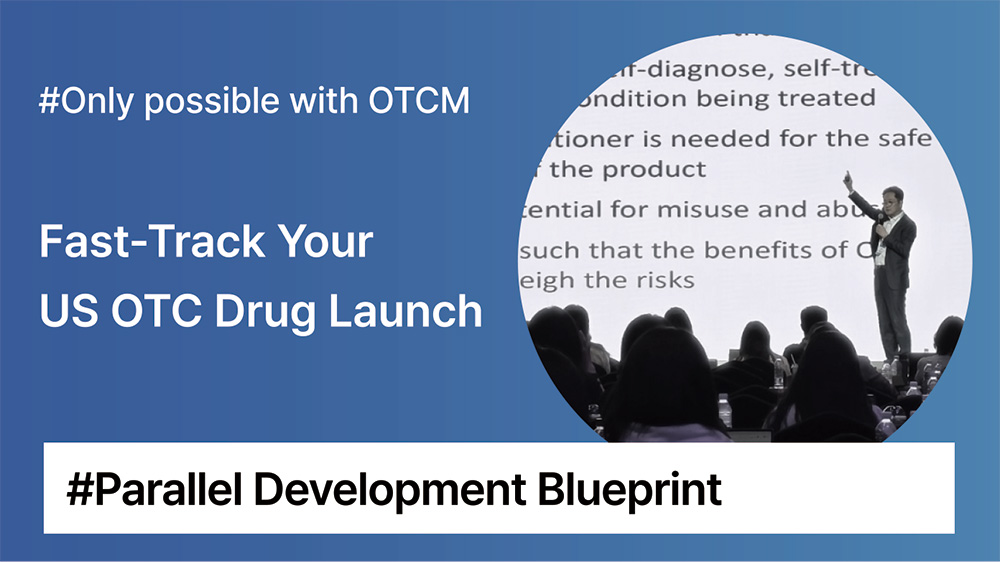
At OTCM, we go a step further than the traditional sequential development methods used
by most manufacturers. By establishing our proprietary Parallel Development
Process—which runs clinical trials, stability testing, and regulatory reviews
simultaneously—we have drastically reduced overall development time.
In next week’s issue, [Part 2] "Why Choose OTCM for Your OTC Products?", we will reveal
the distinct competitive advantages and exact processes that allow OTCM to develop
fully compliant US OTC products in just 4 months.
More insights coming in Part 2.
|
|

|
|
|
|
|
|