|

|
|
01. Dr. M’s Key Insight
|
Hello! This is Dr.M, OTC expert at OTCM
In cosmetics, Halal certification is not simply about evaluating a single finished
product.
It is a comprehensive process that verifies the overall integrity of the entire
system—including ingredient selection, manufacturing processes, storage and
transportation, documentation control, and post-change management.
Because Halal certification assesses the completeness of R&D, procurement,
manufacturing, and quality management systems as a whole, selecting the right
manufacturing partner from the very beginning is critically important.
From this perspective, OTCM approaches Halal certification not as a one-time
response, but as an integral part of a global regulatory strategy.
From ingredient review and formulation design that take Halal standards into
account, to manufacturing facilities and documentation systems that comply with
these regulations, OTCM has the necessary infrastructure in place.
In this newsletter, we have compiled the most frequently asked questions regarding
the Halal certification system into a concise FAQ.
|
02. Frequently Asked Questions (FAQ)
|
What are OTCM’s raw material management standards for Halal certification?
OTCM does not view Halal certification merely as a regulation to exclude haram
ingredients.
Instead, it is approached as a comprehensive management system requirement that
encompasses ingredient selection, production, storage, transportation, and
documentation control.
This approach enables not one-time, product-specific certification, but a
sustainable structure that supports continuous Halal-compliant production and
long-term certification maintenance.
The same principle applies to alcohol.
For this reason, OTCM conducts prior reviews of sensitive materials—such as
animal-derived ingredients and alcohol—based on their source, origin, manufacturing
process, and residual presence, and possesses the capability to systematically
prepare the supporting data and documentation required by certification bodies.

|
Q2. As cross-contamination control is critical, what systems does OTCM have in
place to manage and prevent cross-contamination?
OTCM has established internal standards and systems that allow for the early
identification and structural control of potential cross-contamination with haram
substances, which is a core requirement of Halal certification.
Cross-contamination control is not approached as a partial, process-level measure.
Rather, it is treated as a fundamental prerequisite that must be incorporated
throughout the entire operational system, starting from the factory design stage.
a. Cross-contamination prevention embedded from the factory design stage
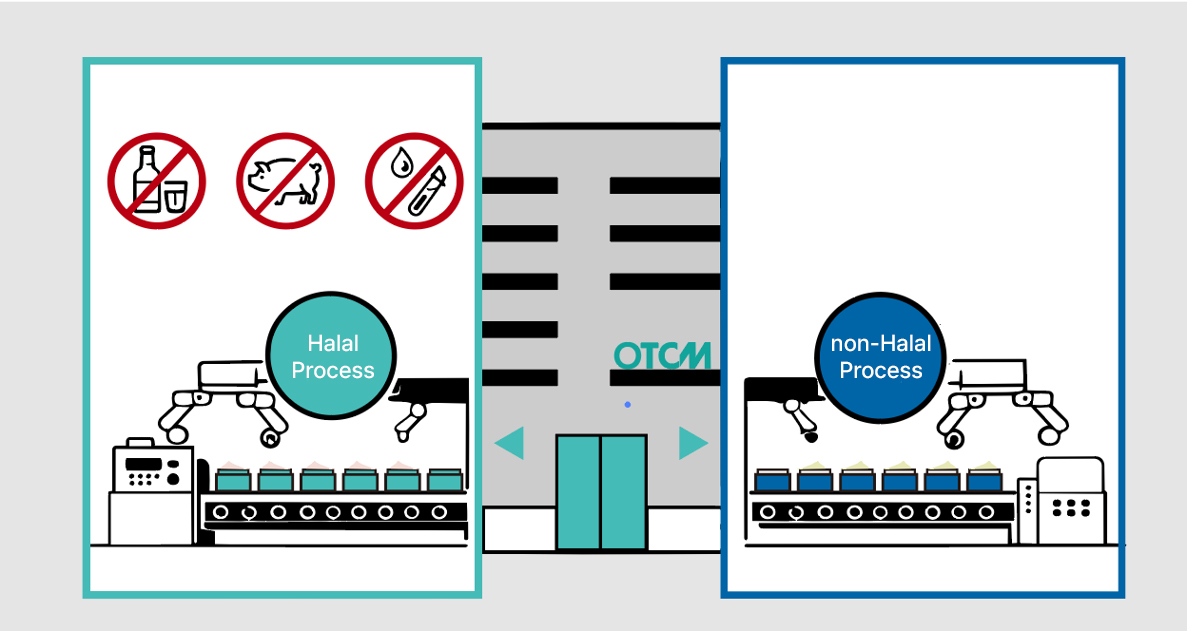
From the initial stages of factory design, OTCM has prioritized cross-contamination prevention as a top objective, building a manufacturing environment that enables the simultaneous production of Halal and non-Halal products without mutual interference.
This represents a design-based approach that structurally minimizes haram-related risks, rather than a reactive strategy focused on post-production controls.
b. Software: MES-based raw material pre-control system
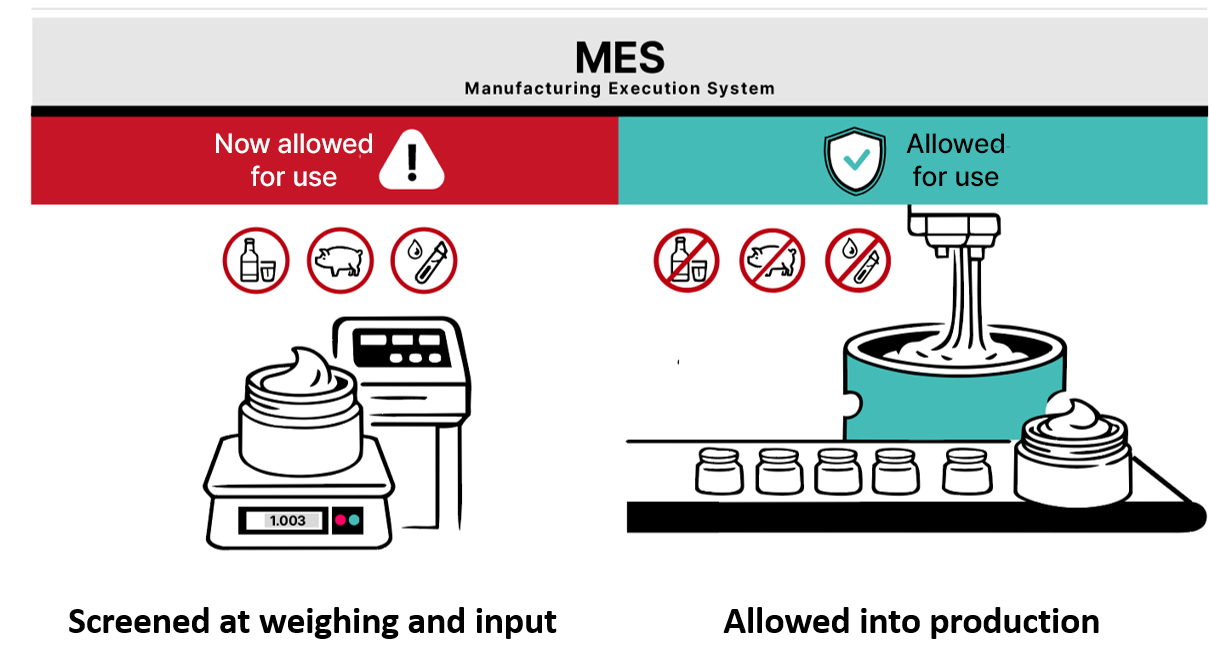
OTCM operates a system in which raw materials that have not been pre-approved cannot be physically used, through its Manufacturing Execution System (MES).
For raw materials that are not Halal-approved:
→ An automatic “Not Allowed for Use” pop-up is displayed at the weighing and input stages
Only approved raw materials are permitted to enter the production process
Through this system-level control, OTCM prevents the introduction of haram raw materials into the manufacturing process in advance, without relying solely on individual experience or manual judgment.
|
c. Hardware: Process-level spatial segregation
OTCM operates all stages—from raw material receiving to manufacturing—in physically segregated spaces by process.
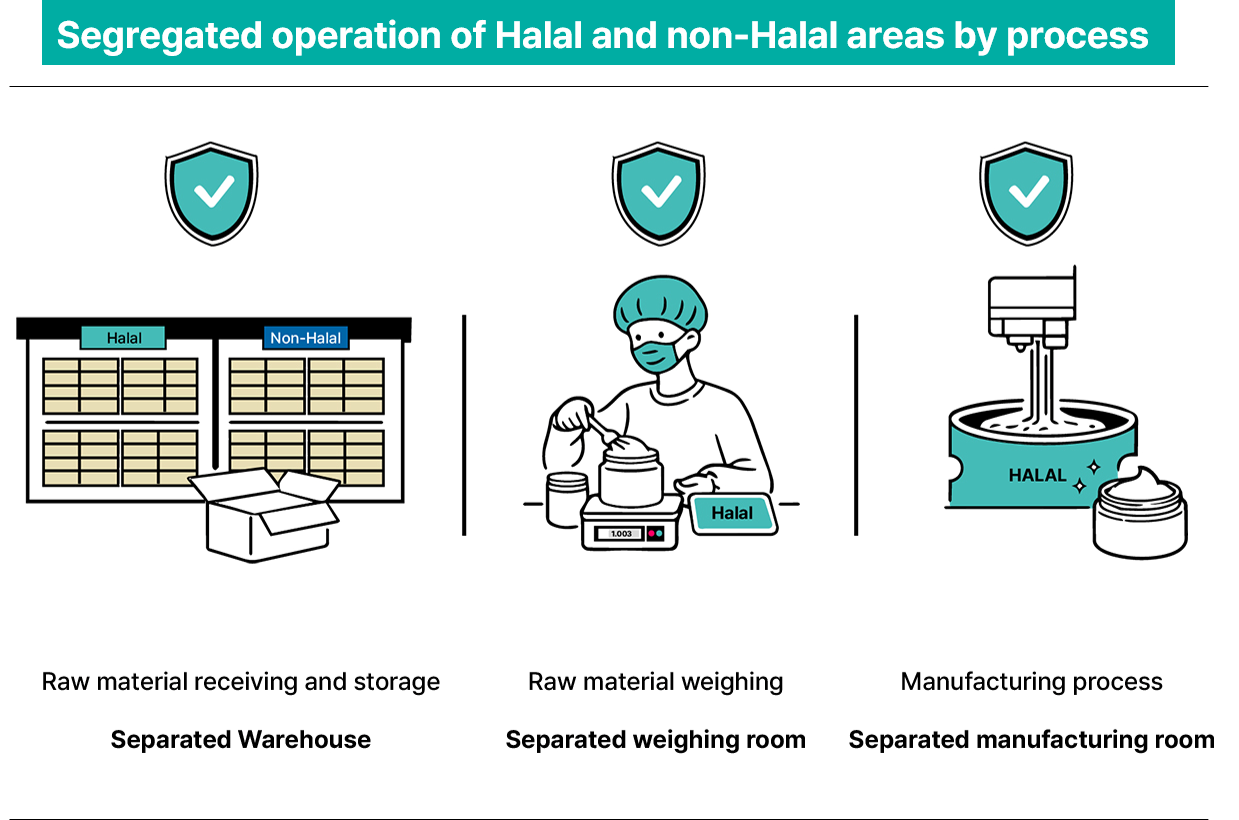
This structure fundamentally prevents inter-process mixing and contact, enabling the parallel production of Halal and non-Halal products without cross-contamination risks.
d. Environmental control: Differential pressure and dust collection systems
To prevent cross-contamination, each production line is equipped with
1) a differential pressure control system, and 2) an independent dust collection unit dedicated to each line.
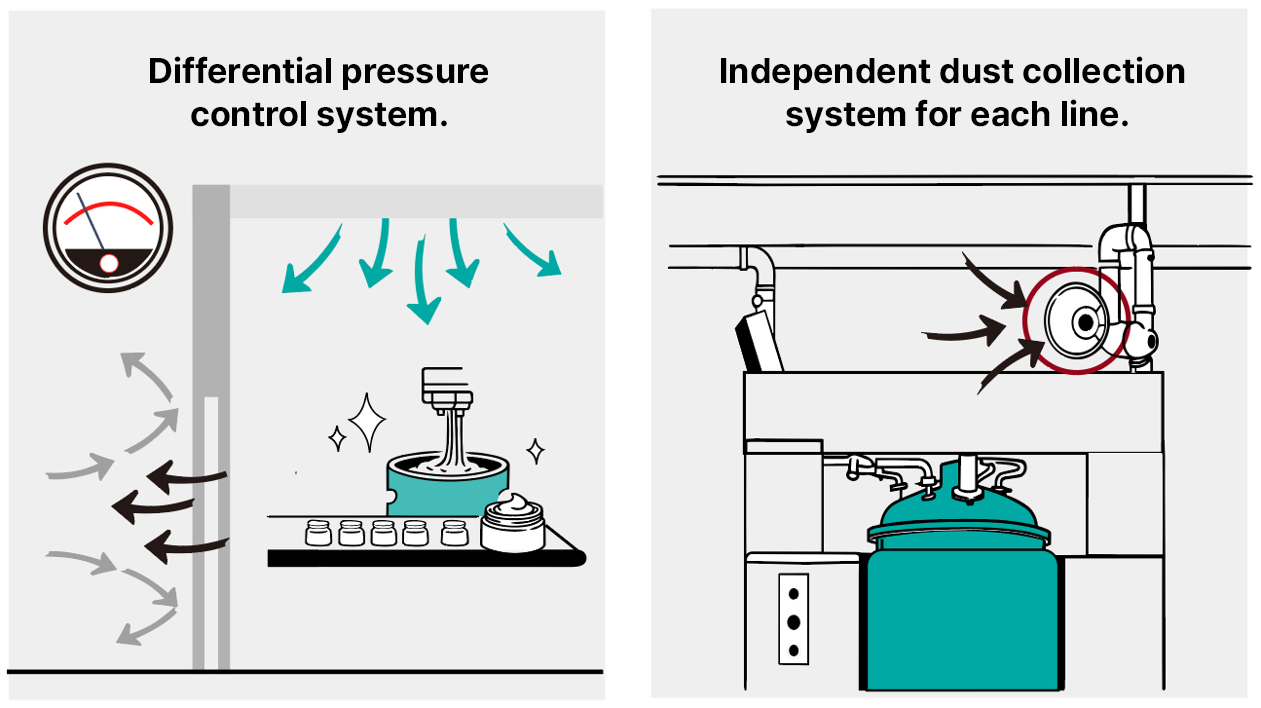
Through these measures, the movement of dust and fine particles is controlled, and even the risk of indirect cross-contamination via airflow is effectively managed.
|
03. OTCM’s Core Competitive Advantage: Sustainability
|
In cosmetics, Halal certification is not simply a procedure for adding a certification mark to a product.
It is a process closer to the verification of the overall completeness of manufacturing systems and quality management frameworks—from ingredient selection through post-change management.
OTCM’s cross-contamination prevention system is not a temporary response designed for a specific product or a specific certification.
From factory design and production flow to system controls and operational standards, every element is structured to prevent cross-contamination with haram materials at a fundamental, structural level.

This is a core competitive advantage of OTCM, as it enhances credibility during Halal certification audits while also enabling stable Halal-compliant production and ongoing certification maintenance even after certification has been obtained.
|
|

|

|
|
|
|
|
|