|
|
Q1.
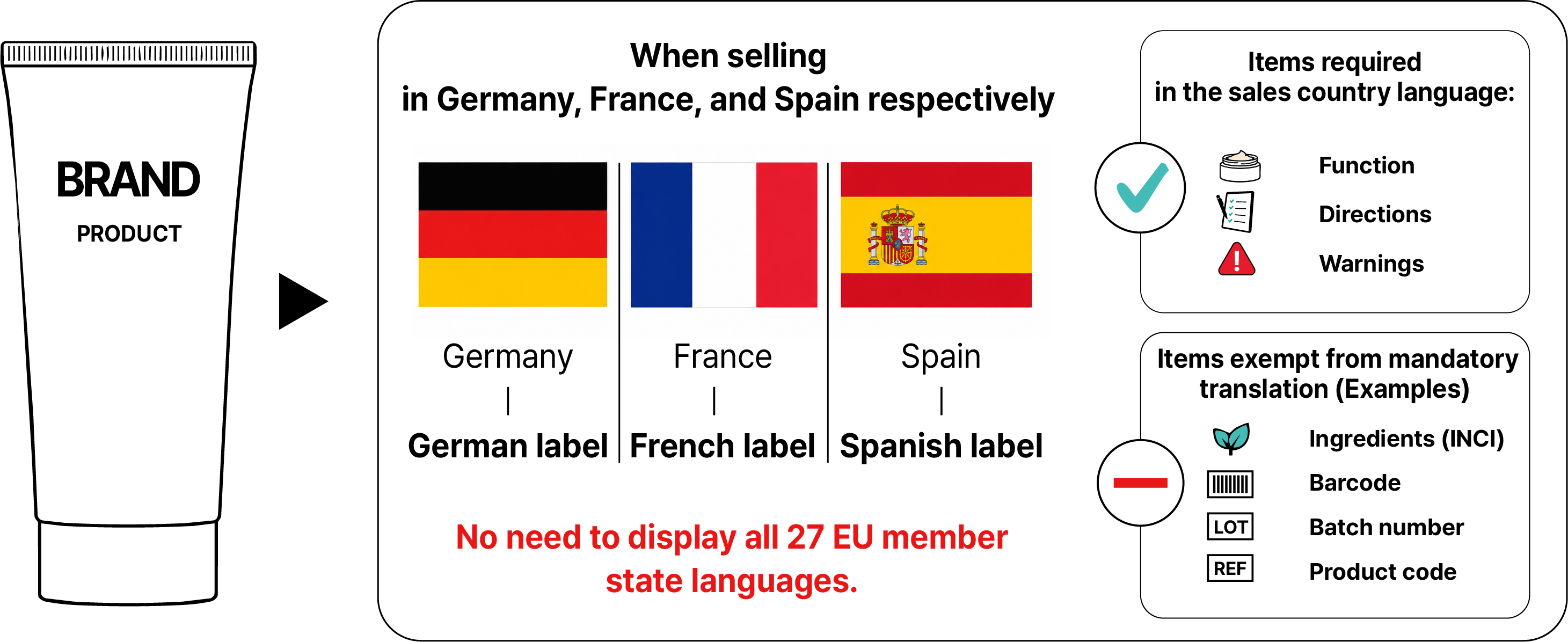
When exporting cosmetics to the EU,
do we need to include the languages
of
all 27 member states on the label?

This is a common point of confusion, but the answer is No.
According to Article 19 of Regulation (EC) No 1223/2009,
mandatory information must be labeled in "a language which can be easily
understood by the final consumer" as determined by the Member State
where the product is made available. Therefore, you do not need to list
the languages of all 27 member states. You only need to meet the
language requirements of the specific countries where your product is
actually being sold.
However, please note that not all text on a label is subject to the
same level of translation requirements. While legally mandatory
information (e.g., function, instructions for use, precautions) must be
provided in the local language, certain details—such as the
ingredients list, which uses common international nomenclature (INCI),
or other general information—may not require translation.
Ultimately, the key to EU labeling is not the "number of
languages, "but accurately identifying and applying the specific
scope of mandatory information required by each country of
sale.
Q2.
If exporting to multiple EU countries,
must the PIF be translated into each local language?
This is a common point of confusion, but the answer is No.
This is a common point of confusion, but the answer is No.
The PIF does not need to be written in the language of every country
where the product is sold. Instead, it must be prepared in a language
that the Competent Authority of the member state where the PIF is kept
can easily understand.
In practice, most EU member states accept English as the language that
is "easily understood by the authorities."

Q3.
My formula is perfect.
Could my sales still be blocked because of the packaging?
Absolutely. In the EU, packaging is just as strictly regulated as
the formula itself.
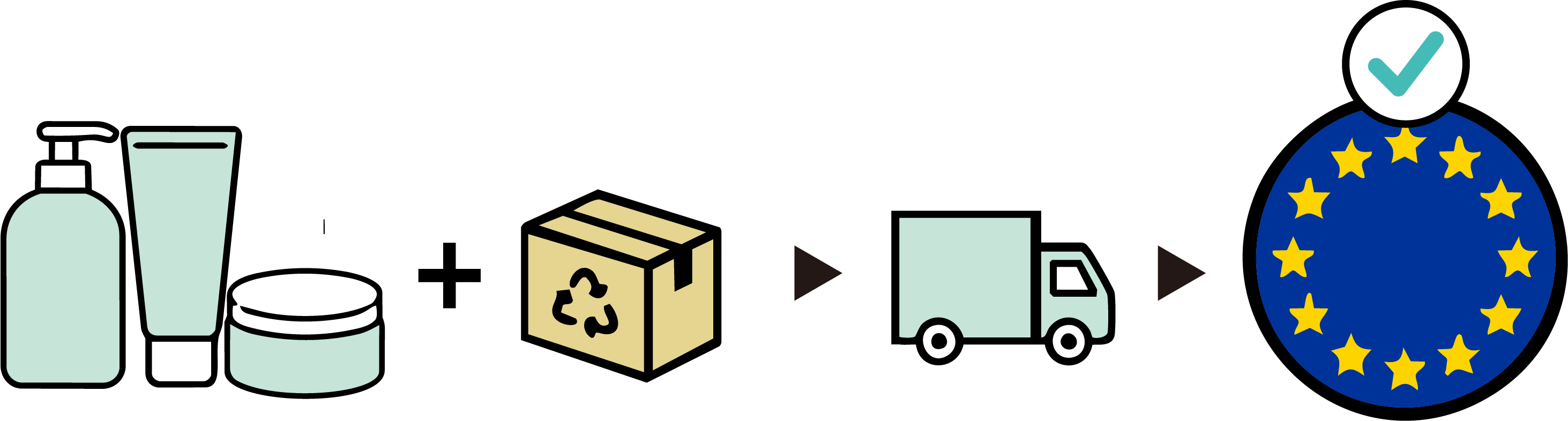
The EU regulations govern the entire lifecycle of
packaging—from manufacturing and composition principles to recyclability
requirements and recovery/recycling responsibilities. In other words,
packaging structure, recyclability, sorting instructions, and EPR
(Extended Producer Responsibility) registration are mandatory
legal requirements within the EU.
The EU market does not look at the formula in isolation. Only when your
packaging compliance is fully prepared can you successfully launch your
product.
Q4.
Can we use the same marketing claims in the EU
that we used in Korea without any issues?
This is where most compliance failures occur.
Under the EU Claim Regulation (655/2013), every claim must be supported
by objective and verifiable evidence.
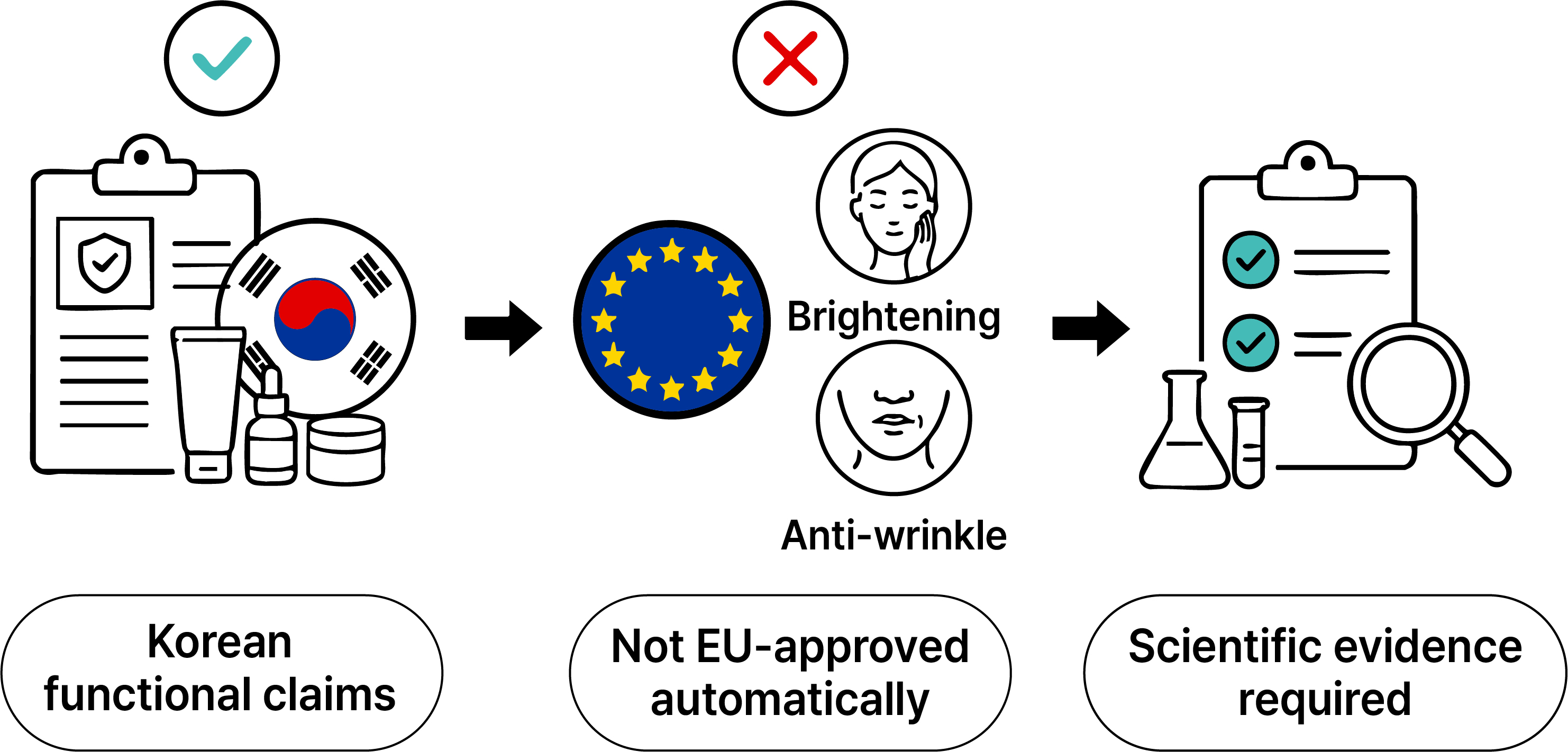
For instance, terms like "Whitening" or "Wrinkle Improvement," which
are permitted in Korea through functional cosmetic reporting, are not
automatically recognized in the EU. To use these claims, you must
provide clinical data and scientific evidence that meet specific EU
standards.
In practice, sanctions due to misleading claims are more frequent than
those due to ingredient issues. In the EU, "what you say" can be even
more critical than "what you put" into the product.
Q5.
What is the most frequently overlooked risk
in the EU market?
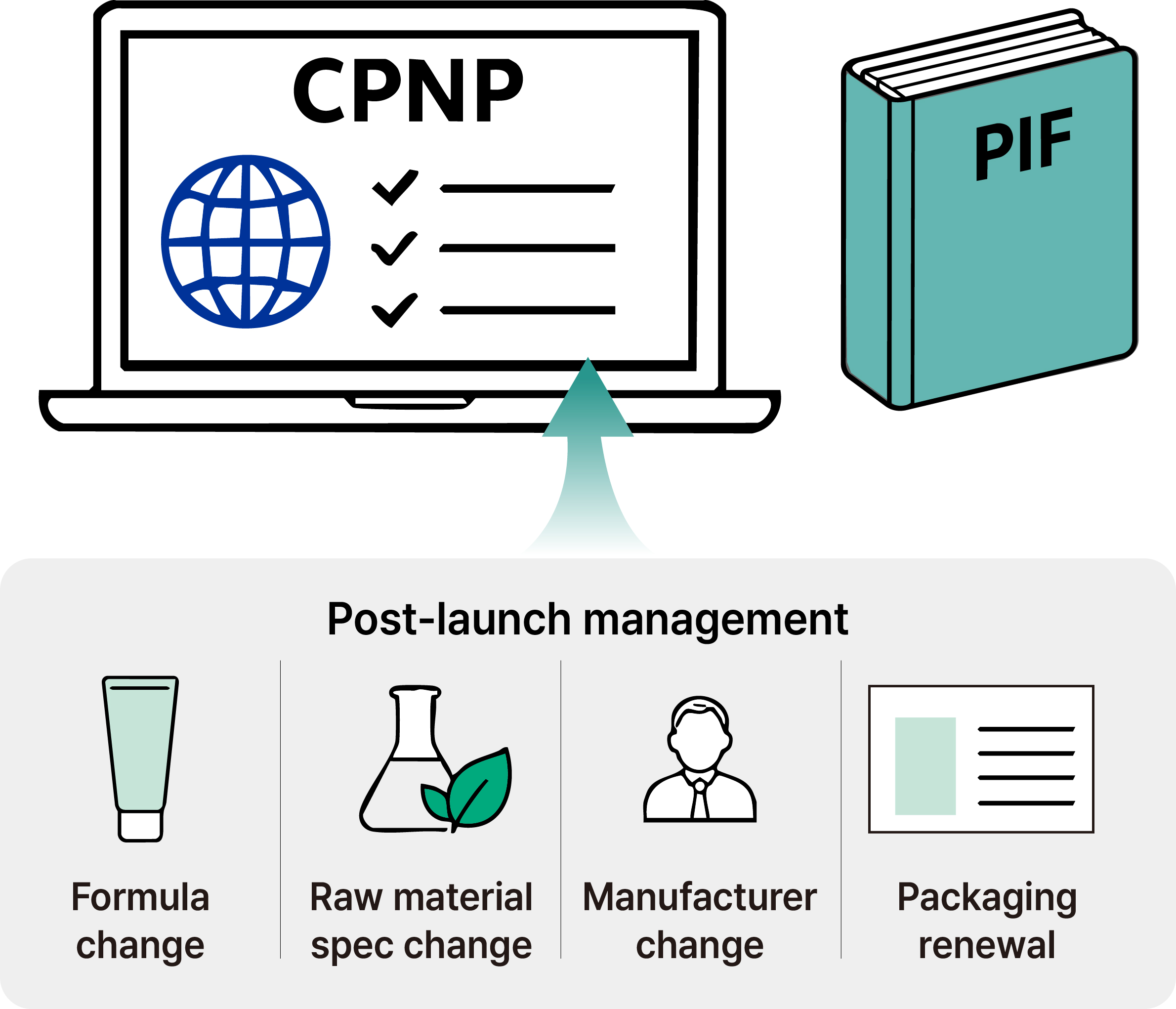
‘It is not "pre-launch" preparation, but "post-launch" maintenance.
Even seemingly minor changes—such as formula tweaks, raw material
specification updates, changes in manufacturing sites, or packaging
renewals—must be reflected in the CPNP and PIF. Since the EU is not an
approval-based market, any failure to keep your records in their
"latest state" will be immediately exposed during post-market
surveillance.
Establishing a system for continuous management is far more critical
than simply getting it right the first time.
|
EU export is not a process of obtaining a single approval.
A product can only be placed on the market when all of the requirements mentioned
earlier are fulfilled simultaneously.
Rather than being simply a “difficult” market, the EU is a market that requires a
clear responsibility structure and a high level of preparation.
Ultimately, the key to entering the EU market is not merely passing procedures, but
having all regulatory requirements systematically prepared before launch.
When properly prepared, EU regulations become not a barrier, but a standard.
It is not the companies that know the regulations, but the companies that are fully
prepared, that enter the market first.
For a successful cosmetic export to the EU, understanding the latest regulations and
practicing hands-on compliance are more critical than ever.
Partner with OTCM—your reliable guide to entering the European market.

|
|

|
|
|
|
|
|